Ready to help treat your pet to a healthy life?
How to Train Your Dog to Behave in Public
By : Kathleen Crampton | Published Aug 4, 2026
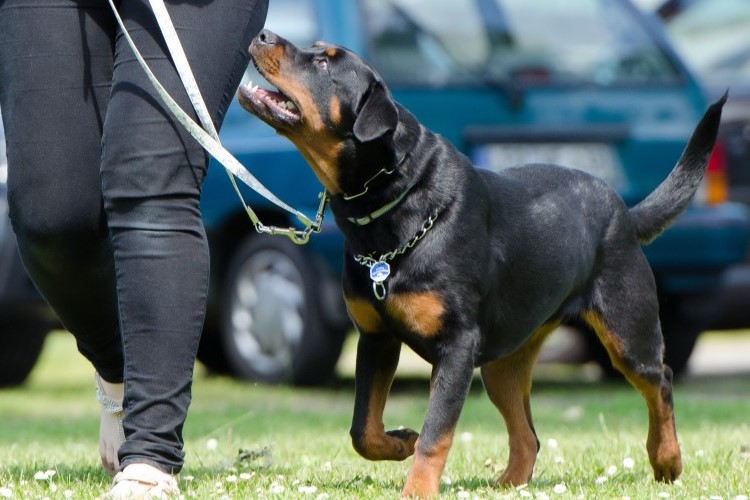
If you've just brought a puppy home, adopted a dog, or simply want to practice training techniques with your adult pup, you're likely wondering what exactly to work on. In addition to dog socialization, potty training, and other core competencies, it's important to learn how to train your dog to behave in public. This way, you and your four-legged friend can head out to dog-friendly cafes, busy sidewalks or hiking trails, stores, and events without fear of how they'll react.
As you read through this guide, remember that public training takes repetition, patience, and gradual exposure. Excitement, fear, or overstimulation can all look like “bad behavior," but really, they're just opportunities to focus on more dedicated training with your pup—always using positive reinforcement. Discover training tips, common mistakes to avoid, and when it might be time to hire a professional trainer.
Tips for training your pup
From dog leash manners to learning your dog's stress signals, here are tips for training your dog to be calm in public.
Start with basic training at home
Basic obedience is the foundation of your dog's public behavior training. Not only do basic commands give them the tools they need to behave in certain situations, but they also help to improve communication between you and your pup and keep them safe.
The seven commands that are crucial for training your dog include:
- Sit
- Down
- Stay
- Wait
- Leave it
- Drop it
- Come
Obedience training should begin at home in a quiet space before practicing in busier environments. This allows them to become confident with practicing the commands before putting them to use in a situation where there are distractions.
Additionally, use positive reinforcement and start small; limit each training session to about 10 minutes so that your pup doesn't become overwhelmed.
Teach loose-leash walking
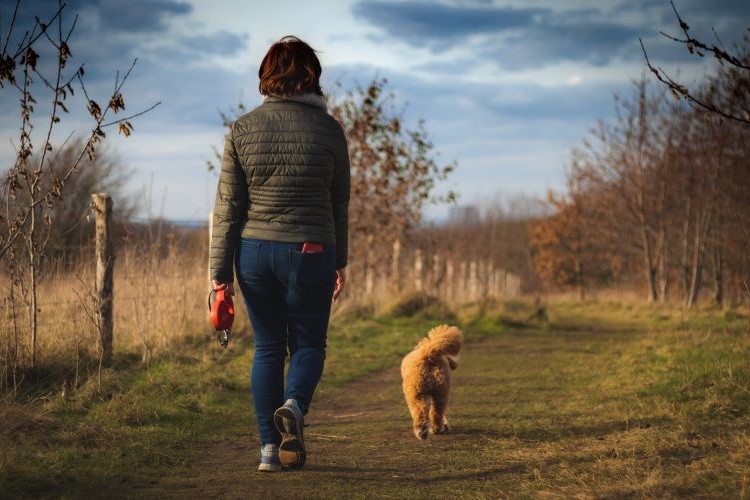
Next, it's time to teach dog leash manners so that you both can have enjoyable exercise sessions and your dog can stay safe. Leash training is important for learning how to stop dog pulling in public and preventing other unwanted behaviors (like biting on the leash), putting others at ease when in public, and giving you and your furry pal the opportunity to deepen your bond.
Here are some basic guidelines for loose-leash training:
- Use a properly fitted collar or harness. Your veterinarian can help you choose the right setup for your dog.
- Start training at home. Get your pup used to wearing the collar, then let them sniff and play with the leash on their own time. Start using the leash by taking a few steps at a time, then gradually increasing the length of steps around the house.
- Move leashing training outside. Once your pup gets the hang of walking with the leash inside, move outside to a quiet space (like your yard or a secluded spot at a park). Practice longer walks.
- Reward walking near you, check-ins, and attention. Use positive reinforcement when your dog stays by your side and checks in with you while on a walk—no matter the length.
- Stop when your dog shows unwanted behavior. Your dog may pull or bite on the leash during training. It's important to stop walking and redirect, which could look like telling your dog to "drop it," then rewarding the behavior.
- Communicate with your pup. The American Kennel Club advises pet parents to choose cue words when leash training, such as "turn," "with me," and so on—using positive reinforcement when they do what you ask.
Practice gradual exposure
Even if your dog is calm at home, it doesn't mean that they're immune to high-energy, high-distraction places. Any pup with limited exposure to new or crowded places may exhibit undesired behaviors when put in those situations.
But before you head to the busy local farmer's market with your pup, practice socializing your dog in safe, trusted environments. This involves:
- Exposing them to new sounds and smells
- Introducing them to new people and socialized dogs at your house or in the yard
- Limiting leash training to quiet spaces before moving to more crowded areas
Socialization is a gradual process that can take time, especially if your pup is fearful, anxious, or aggressive. Slowly increase the amount of time they're exposed to each new element, and always watch for negative behavior.
Once your dog shows that they can stay calm when exposed to various situations in a trusted environment, move on to more challenging areas, such as a park space with people milling about, a not-too-busy cafe, a visit to the vet, and so on. Try training them to avoid distractions with cue words, such as "focus" or "watch me." These can be incredibly beneficial training cues in busy environments.
Help your dog stay calm around people and other dogs
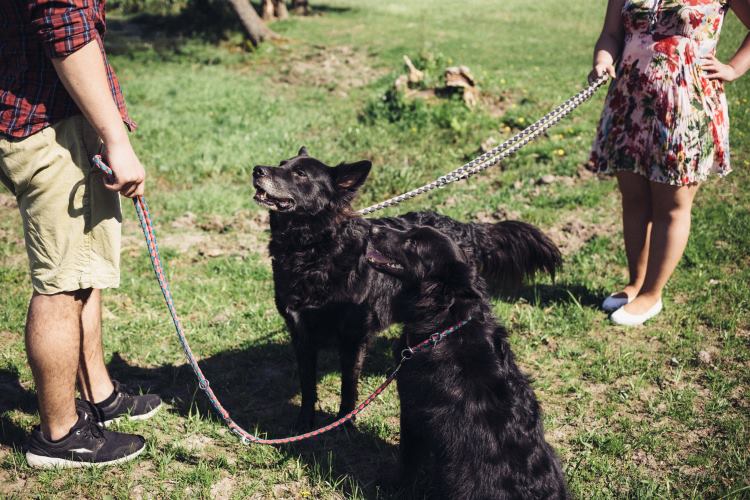
Some dogs are more outgoing and friendly than others—but that still doesn't mean that you don't need to train them to stay calm when meeting new people or dogs. Maintaining calm behavior when greeting people and pups is just as important as staying calm in busy, distracting situations.
The following are ways to ensure you have a calm dog in public:
- Use obedience cues. If your dog is overly excited, jumpy, or fearful of an encounter, communicate with them using obedience cues, such as "sit," "stay," or "down." This is a great way to practice your dog's polite greetings. Train them to sit when you or others approach them (starting first at home, then moving to public encounters).
- Reward calm observation. Train your pup to stay where they are or go to their bed/kennel when someone visits. Reward them for staying calm and obeying your command. This dog socialization tip can also be used in public places, where you train your pup to sit or stay by your side when encountering new people or animals.
- Watch body language. If your dog is uncomfortable, they may bark, growl, stiffen, or become very still. Pay attention to these signs so that you can move away from the encounter and help your dog feel safe again before another exposure.
- Advocate for your dog’s space. If your pup isn't ready to greet others, communicate that! Warn approaching people that your dog doesn't want to be pet, and create distance when needed. Your dog's safety—and the safety of those around you—is more important in the moment than a forced greeting when your dog is overwhelmed.
Use positive reinforcement
Throughout the process of learning how to train your dog to behave in public, always use positive reinforcement. This is a widely accepted and encouraged method for dog training—because dogs respond well to praise.
Positive reinforcement helps dogs understand what behavior to repeat. But as Humane World for Animals points out, there are some best practices and tips to remember when using positive reinforcement:
- Reward the behavior immediately so that they associate the reward with the right action.
- Be careful of rewarding the wrong behavior (such as letting them go outside when they bark, rather than mitigating the barking).
- Use a combination of treats or toys and vocal praise, gradually lessening the treats as your dog shows that they've learned the behavior (but continue to provide praise!).
- Try using a variety of treats and toys to keep your pup interested—just make sure that they're vet-approved.
Know your dog’s public triggers
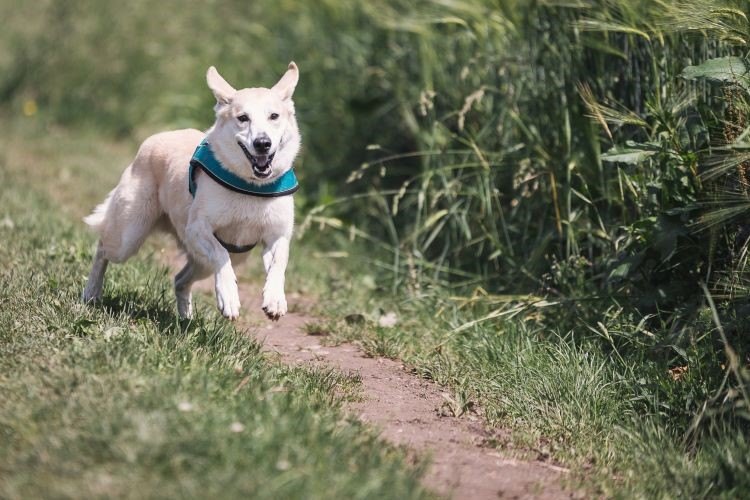
When learning how to train a dog in public, it's crucial to be aware of your pup's triggers, which could cause your dog to become overly excited, stressed, or aggressive. Common triggers include other dogs, strangers, young children, loud noises, and crowds.
Noticing your dog's specific triggers early helps prevent escalation. If you notice that your dog begins to growl, hide, lunge, bark, tuck their tail, tremble, pace, or exhibit other stress signals, it's best to remove them from the trigger. Then, the next time you encounter that trigger, give your dog a treat so that they can associate it with something positive. The desensitization process may take time, so remember the dog socialization tips for gradual exposure to new sights, sounds, people, and situations.
Common public training mistakes to avoid
When learning how to train a dog in public, don't make these common mistakes:
- Moving too fast. Dog obedience in public takes time and starts with a foundation of basic training. Your pup should master core cues and leash training in the comfort of your own space before moving on to more complex environments, such as crowded places.
- Letting strangers overwhelm the dog. While your dog is training, it's best to keep strangers at a distance to avoid any unwanted interactions and keep your pup focused on you.
- Punishing fear or overstimulation. It's widely advised to avoid punishment when training dogs. They respond best to positive reinforcement, and punishment can lead to fearful or aggressive behavior—not something you want when trying to have a calm dog in public.
- Expecting perfect behavior in new spaces. Dogs, like their pet parents, aren't perfect. Even the most well-behaved pups can react to triggers or distractions, like a squirrel, a barking dog, or something else. Remember your training methods and practice them with your furry pal when you see a potential trigger or when your dog reacts.
- Ignoring stress signals. Be cognizant of your dog's triggers and reactions to them. Work on desensitizing your pup to these specific triggers with socialization techniques.
When to work with a professional trainer
Learning how to train your dog to behave in public can be challenging, even for the most patient pet parents and generally well-mannered pups. It's important to know when it might be time to seek professional help for your dog. Here are some instances in which working with a professional trainer may be necessary:
- They're reactive to people and other animals—and don't show signs of improvement with at-home training.
- Your pup is aggressive (biting, lunging, growling, etc.).
- Your dog has severe fear or anxiety.
- You don't feel safe handling your dog.
Be sure to seek out a positive-reinforcement-based trainer or veterinary behaviorist when looking for assistance. Your at-home training and outside help can make all the difference when preparing your pup for public outings.
Pet Parenting is the official dog and cat blog of Trupanion, a leader in the world of pet insurance. Here you’ll find useful dog and cat care tips, important veterinary insights, and an abundance of pet lifestyle topics. All of our articles are written by real humans with a love for pets, not AI. However, please note that the views expressed here are those of the individual authors and do not necessarily reflect those of Trupanion. Articles are reviewed by veterinarians for accuracy, but they are not a substitute for professional diagnosis and treatment. Always consult with your own pet’s veterinarian for advice.