Ready to help treat your pet to a healthy life?
How Often Should You Take Your Puppy to the Vet in the First Year?
By : Brooklyn Benjestorf | Published Jun 16, 2026

Bringing home a puppy is equal parts joy, chaos, and just questioning everything. One of the biggest questions we hear new pet parents ask is, how often does my puppy actually need to go to the veterinarian?
Your puppy’s first year is packed with rapid growth, critical vaccinations, and important health milestones. Regular veterinary visits during this time aren’t just to check boxes. They’re to help set the foundation for a long and healthy life for your new pet.
Let’s walk through some ideas of what to expect in your puppy’s first year, when to go to the veterinarian, and how to make the most of every visit.
Why regular vet visits matter for puppies
Your puppy’s first year is going to be a critical time for growth, making regular veterinary visits essential for building a strong foundation for lifelong health.
Early development happens fast
Puppies grow and change so quickly—sometimes so fast it seems like overnight! Regular veterinary visits will allow your veterinarian to monitor your puppy’s development, track their weight gain, and catch any potential issues early on, before they potentially become bigger—and more expensive—problems.
“Things like congenital conditions, parasites, or nutritional gaps are much easier to manage if they are caught early,” says Trupanion veterinarian Sarah Nold, DVM. “Having those regular touchpoints with your veterinarian is beneficial to your puppy’s health in so many ways.”
Preventative care helps long term health
Preventative care is the backbone of puppy wellness. This includes:
- Vaccinations
- Parasite prevention like fleas, ticks and heartworms
- Routine screenings
These early interventions don’t just help protect your puppy right now. They help prevent serious diseases from developing later on down the road.
Building a positive relationship with your veterinarian
Frequent visits to your veterinarian help your puppy get comfortable with:
- Being held by strangers
- New environments
- Mildly weird experiences—thermometers, anyone?
All of this matters more than new pet parents might realize.
“Puppies who associate the veterinarian with positive experiences tend to have less anxiety at the vet,” says Dr. Nold. “This can help make them easier to examine throughout their lives.”
Puppy vet visit schedule: A month-by-month guide

Puppies benefit from a structured series of veterinary visits throughout their first year to stay on track with vaccinations, development, and preventative care. Here’s a rundown of what that year of visits looks like.
8-10 weeks: The first vet visit
This is your puppy’s big debut!
During this visit, your veterinarian will:
- Perform a full physical examination
- Check for parasites
- Begin their core vaccinations
Core vaccinations protect against protect against potentially life-threatening, but very preventable, infectious disease. They typically include vaccinations for:
- Distemper
- Parvovirus
- Adenovirus
- Leptospirosis
- Parainfluenza
- Rabies
Your veterinarian may also recommend other vaccines depending on your puppy’s risk factors. Some of the things that pets are vaccinated for are transmittable to humans, so the vaccines protect us, too. .
Our partners at Boehringer Ingelheim Animal Health, who are leaders in preventive medicine, appreciate the important role that animal vaccinations have in protecting the health and quality of life for both pets and humans.
“By following vaccine guidelines, pet owners help protect their puppies from life-threatening infections, reduce the spread of disease in the community, and give their pets the best chance for a long and healthy life,” says Boehringer Ingelheim Animal Health Vice President & Head of US Pet Business, Daniel Watkins.
“For puppies in particular, vaccines help their developing immune system recognize and fight off dangerous diseases, such as rabies, parvovirus and Bordetella, before they can cause serious illness,” Watkins explains.
If you’re considering pet insurance, your first wellness visit is the perfect time to talk to your veterinarian about a Trupanion Exam Day Offer. If you activate the offer within 24 hours of the vet visit, you can get 30 days of coverage (with no waiting period) to see if Trupanion would be a good fit for you and your puppy.
10-16 weeks: Follow-up visits and booster shots
Puppies will need a series of vaccinations, not just one round. You’ll typically return to the veterinarian every 3-4 weeks during this stage for:
- Booster vaccinations
- Weight and growth checks
- Ongoing parasite prevention
“This period is so critical because your puppy is gradually building their immunity,” says Dr. Nold. “Skipping booster shots can leave gaps in your pet’s protection against disease.”
During this stage, your veterinarian may also start conversation about:
4-6 months: Growth, teething, and behavior check-ins
By now, your puppy is likely:
- Teething
- Testing boundaries
- Growing rapidly
Veterinary visits during this phase often focus on:
- Dental development
- Behavior concerns
- Continued preventative care
This is also a very common time to start to discuss:
- Spaying or neutering
- Microchipping
6-12 months: Transition to adulthood
Your puppy is likely starting to look a lot like a dog by now. But they’re not quite there yet!
During this phase, your veterinarian may:
- Perform pre-surgical exams if you plan to spay or neuter, if you haven’t already
- Administer final core vaccination boosters if any were skipped or missed
- Assess your puppy’s overall health before transitioning to adult care
By the end of the first year, most dogs move to a cadence of annual wellness visits.
What happens at a puppy vet visit?

Each puppy veterinary visit is designed to assess their overall health, prevent disease, and guide you through your dog’s rapid early development.
Physical exams and routine checks
Each veterinary visit is typically a head-to-tail physical examination. At each visit, you can expect your veterinarian to:
- Listen to your puppy’s heart and lungs
- Check their eyes, ears, and teeth
- Feel their abdomen
- Assess their general body condition
Vaccination protocols: What’s normal
Vaccines are given on a schedule, not all at once. Your veterinarian will strategically space them out in order to:
- Maximize their effectiveness
- Minimize their side effects
You’ll also likely get guidance on when your puppy is safe to:
- Visit dog parks
- Attend puppy classes
- Socialize freely
Parasite screening and prevention
Puppies are vulnerable to:
- Intestinal worms
- Fleas
- Ticks
- Heartworms
Routine fecal tests and preventative medications are standard for puppies in their first year, and beyond.
How to prepare your puppy for vet visits

A little prep ahead of taking your puppy to the veterinarian will go a long way. Here are some tips to help make the visit go smoothly:
- Bring treats your puppy loves
- Practice gentle handling at home—eg., touch their paw, ears, and mouth
- Bring your pup by the veterinarian for a quick weight check, cuddle and treat—for free!
- Stay calm! Your puppy takes their cues from you
And the pro tip: Schedule your visits for when your puppy is going to be a little bit tired. A post-nap pup is often more cooperative than a zooming chaos goblin.
When to go to the emergency vet with a puppy
Even with perfect planning, things can happen. Puppies are curious, clumsy, and seemingly committed to chaos and destruction.
Signs you should seek immediate care
Call your veterinarian or go to an emergency clinic if you notice:
- Vomiting or diarrhea that won’t stop
- Lethargy or weakness
- Trouble breathing
- Pale gums
- Seizures
- Ingestion of anything toxic
Common puppy emergencies
Some of the most frequent health issues for puppies include:
- Parvovirus in puppies that haven’t completed their vaccines
- Intestinal blockages from swallowing objects
- Poisoning from plants, foods or medications
- Severe dehydration, often caused by vomiting or diarrhea
When in doubt, call your veterinarian
If something ever feels off, just trust your instincts. It’s always okay to call your veterinarian, even if it turns out to be nothing. Some common medical emergencies in pets, like poisoning, are very time critical, so don’t hesitate to act quickly when it comes to your pet’s health.
The real cost of puppy veterinary care, and how to manage it

Let’s be real—all that early veterinary care is going to add up.
Between exams, vaccines, diagnostics and any unexpected issues, the first year can end up one of the most expensive periods of your dog’s life. While you’ll be able to plan for all those scheduled and budgetable costs when it comes to the vaccines and preventative care, there’s likely to be some accidents and illnesses that spring up you just can’t predict.
That’s why planning ahead can make a major difference.
Pet insurance vs veterinary wellness plans
This is the part that can trip people up when they’re researching puppy insurance plans.
Pet insurance—like Trupanion—typically covers:
- Accidents
- Illnesses
- Diagnostics
- Surgeries
- Other unexpected medical costs
Depending on the plan, wellness plans through your family veterinarian will typically cover:
- Routine exams
- Vaccinations
- Preventative care
- Other more predictable medical costs, depending on the plan
Feature | Pet Insurance | Veterinary Wellness Plan |
|---|---|---|
Purpose | Financial safety-net for unforeseen vet bills caused by accidents or illnesses | Spreads out predictable yearly costs of routine preventive care |
Typical items covered* | New injuries, sudden or chronic illnesses, specialist diagnostics, surgeries, medications, emergency hospitalization | Annual exam, core vaccinations, flea/tick/worm control, routine lab work, sometimes desexing or microchipping discounts |
When it helps most | Veterinary expenses you can’t plan or easily budget for — e.g. lifelong allergies, midnight vomiting, or a swallowed chew toy | Everyday care you know is coming each year — e.g. $120 vaccination package |
Payment model | You pay a monthly premium; insurer pays a set % of eligible costs (e.g. Trupanion covers 90% with no payout limits* and can pay directly to the veterinarian)† | You pay the clinic a set monthly/annual fee; they provide listed routine services/discounts |
Works together? | Yes. Many pet parents keep both: wellness plan for predictable spend + insurance |
|
*Terms, conditions, waiting periods, deductibles, excesses/coinsurance, limits and exclusions apply; always read the Product Disclosure Statement (PDS) or Policy Document.
† Trupanion software required at the veterinary hospital with veterinarian-approved direct bill pay. Visit our website to see if your veterinary hospital accepts direct payment.
Pet insurance is designed to cover the unexpected risks that can’t be planned or easily budgeted. Wellness plans through your family veterinarian, on the other hand, are assurance. They cover the predictable costs along the way.
Trupanion is here for the big stuff (and all the smaller accidents and illnesses, too).We don’t include preventative care as part of our plans so we can focus on the type of medical care that’s harder to plan for, with no payout limits per condition, per year, or over the lifetime of the pet
Each of these types of plans complements one another. They’re two sides of the same coin. To learn more about a veterinary wellness plan, talk to your family veterinarian to see what they might offer at their practice.
Pet insurance for puppies: What you should know

According to Trupanion’s data, nearly one in two puppies require unexpected veterinary care before their first birthday. Planning ahead for veterinary costs can make a big difference, and getting your puppy signed up for a dog insurance plan early in their life can help ensure the effectiveness of their coverage later down the road.
Why consider insurance early?
Enrolling your puppy in pet insurance early in their life can:
- Lock in coverage before any pre-existing conditions develop—this is a big one for long term pet care!
- Help cover unexpected accidents and illnesses
- Provide peace of mind during a high-risk life stage
Puppies are rolly-polly little bundles of joy, but they haven’t been trained yet. This means they tend to eat things they shouldn’t, lack self-control, and get into everything. This means more potential for emergencies.
Pet insurance can help soften the financial impact of that surprise veterinary care.
Choosing the right coverage
Getting your puppy a pet insurance plan early will give you more flexibility and fewer restrictions when it comes to coverage. When evaluating pet insurance plans, be sure to take a careful look at:
How the claims process works
Not all providers handle claims the same way. With Trupanion, the process is designed to be straightforward, and VetDirect Pay™ solution was designed to eliminate the inefficiencies of reimbursement.
At Trupanion, the claims process is easy:
- Your pet receives care
- Trupanion covers their portion
- You pay the remaining balance
- This can be handled one of two ways:
- Trupanion pays the veterinary hospital directly via VetDirect Pay
- You submit your invoice and we reimburse you ASAP—usually as quickly as 24 hours
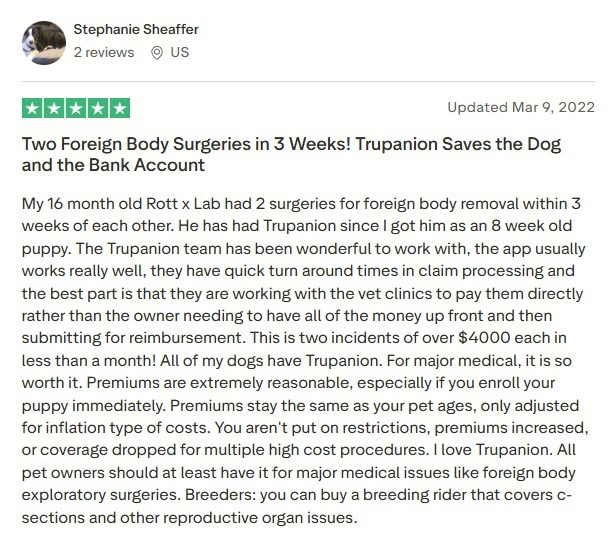
Most companies will reimburse you after you’ve paid the veterinary bill, but Trupanion is the only provider that’s able to pay the veterinarian directly at checkout.
Setting your puppy up for a healthy life
Your puppy’s first year is going to be busy for both of you. Regular veterinary visits might feel like a lot at first, but they serve a bigger purpose. They protect your puppy during their most vulnerable stage, can catch issues early, a help build habits that support lifelong health.
If you follow a consistent schedule, stay proactive, and partner with your veterinarian you’re on your way to give your puppy one of the best possible starts. That peace of mind will be worth every visit.
Pet Parenting is the official dog and cat blog of Trupanion, a leader in the world of pet insurance. Here you’ll find useful dog and cat care tips, important veterinary insights, and an abundance of pet lifestyle topics. All of our articles are written by real humans with a love for pets, not AI. However, please note that the views expressed here are those of the individual authors and do not necessarily reflect those of Trupanion. Articles are reviewed by veterinarians for accuracy, but they are not a substitute for professional diagnosis and treatment. Always consult with your own pet’s veterinarian for advice.